

Living the Approach

At home or in a setting, behaviour can feel hard to hold.
You might find yourself repeating the same instructions.
Trying to stay calm, but feeling unsure what’s really going on.
Knowing there’s something deeper — but not quite seeing it.
This approach begins in a different place.
A different way of seeing
Instead of asking,
“how do I stop this behaviour?”
You begin to ask,
“what is this showing me?”
Behaviour is not something to control.
It is something to understand — and bring back into balance.
What this looks like
A child who won’t sit still
may need movement before they can focus.
A child who stays on the edge
may need safety and time.
A child who disrupts often
may need connection or expression.
When the need is understood, the response changes.
And so does the outcome.
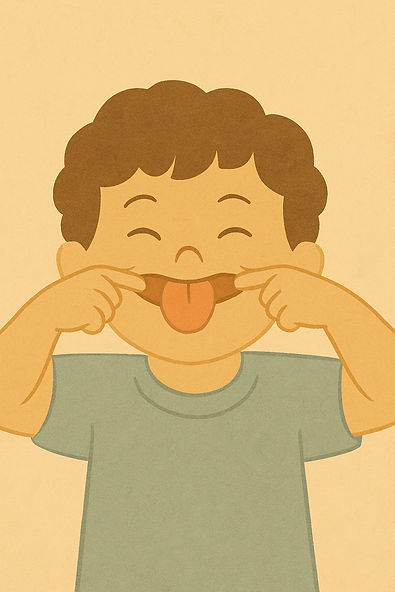
What it can feel like now
-
Repeating yourself
-
Feeling unsure
-
Trying different approaches
-
Hoping something works
What begins to shift
-
You start to recognise patterns
-
Behaviour begins to make sense
-
You respond with more clarity
-
Your child feels more understood

Where are you starting from?
For Parents
If you’re trying to understand your child at home and want a clearer way of seeing what’s going on.
For Practitioners
If you work with children and want more clarity in the moment — understanding behaviour as it happens.
For Settings
If you’re thinking about your whole team, and want to introduce a shared way of understanding and responding.
From Insight to Practice
Many practitioners begin by exploring behaviour through a simple lens — noticing patterns and understanding what sits beneath them.From there, this can grow into a shared approach across a setting, supporting consistent responses, clearer observation, and stronger inclusive practice.